ken
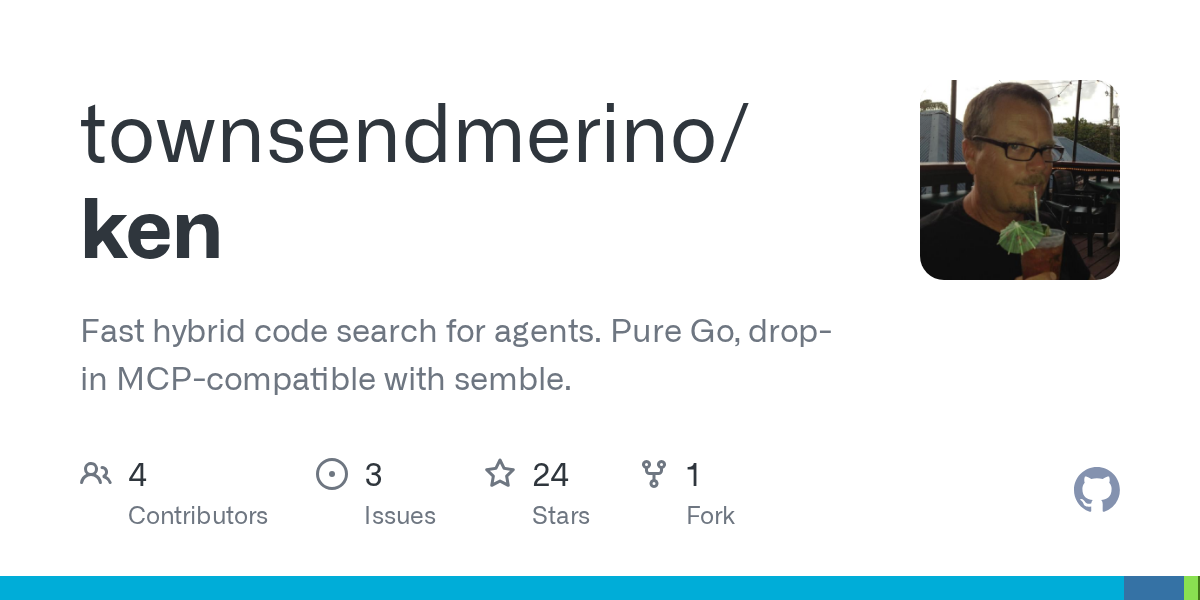
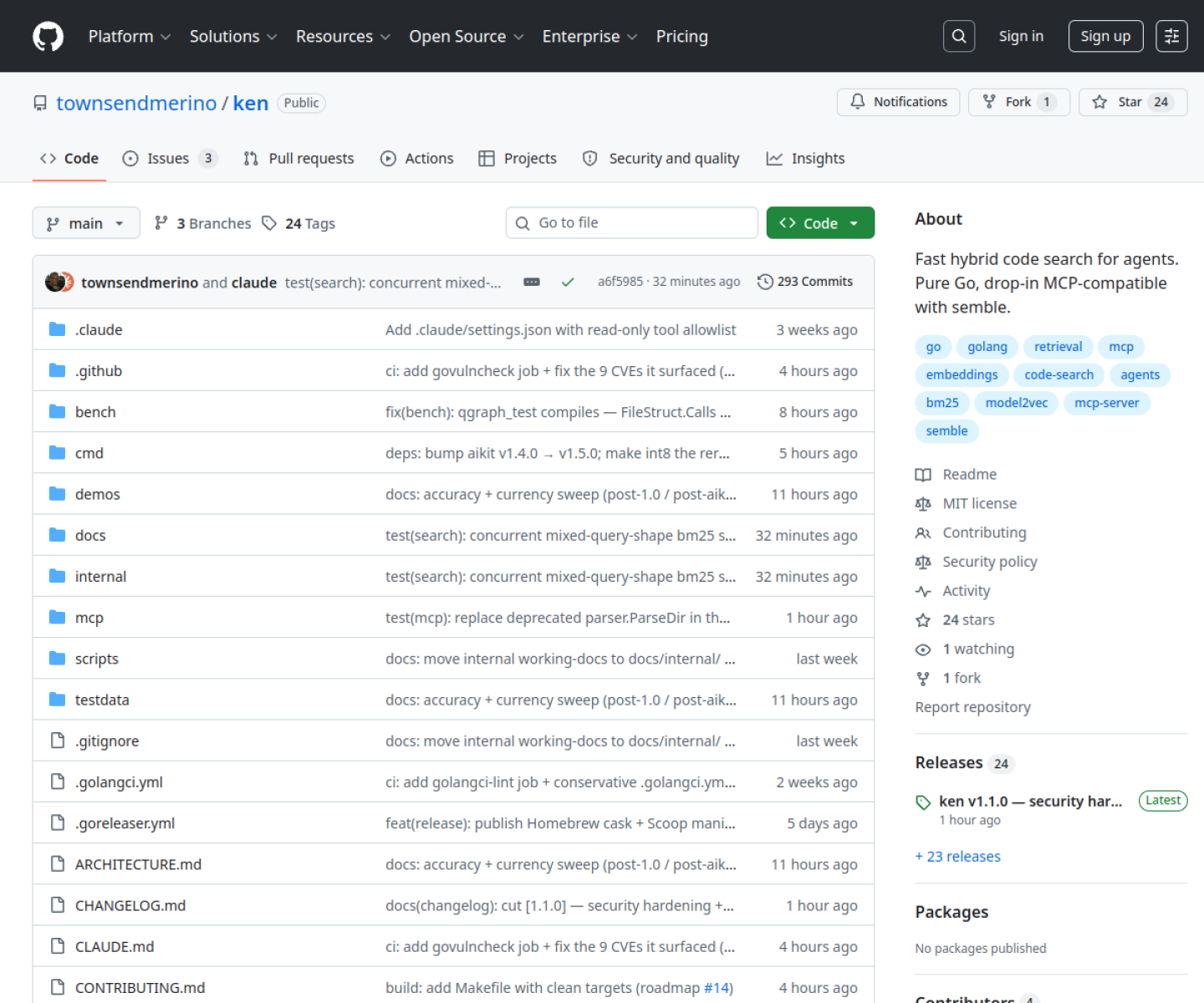
Hybrid code-search engine for agents, combining symbolic and embedding-based retrieval in a Go project that is described as MCP-compatible with semble.
AI Project Details
ken review: Hybrid code-search engine for agents, combining symbolic and embedding-based retrieval in a Go project that is described as MCP-compatible with semble.
ken stands out because it is not just another chat shell. The product materials describe a system centered on index a codebase with ken, connect it to an agent workflow, and let the retrieval layer answer code-search requests through its hybrid search approach. That matters because the mechanism is the product, not a thin wrapper around a frontier model.
Why the architecture matters
ken is narrow in a good way: it focuses on code retrieval instead of trying to be another full agent runtime. The project description is specific about the retrieval shape, combining BM25, embeddings, and MCP compatibility. Because it is written in Go and scoped to one job, it may appeal to teams that want a lightweight retrieval layer they can inspect directly.
How to evaluate the core loop
Start by testing the narrowest real workflow the product claims to improve. For ken, that means users should index a codebase with ken, connect it to an agent workflow, and let the retrieval layer answer code-search requests through its hybrid search approach. The result should be easier to inspect, integrate, or control than a direct agent session.
Where it stands out
| Evaluation angle | Fit | Why it matters | | --- | --- | --- | | Best-fit user | High | Developers building agent workflows that need faster, more deliberate code retrieval than a naive grep or one-shot embedding lookup. | | Core workflow clarity | High | Index a codebase with ken, connect it to an agent workflow, and let the retrieval layer answer code-search requests through its hybrid search approach. | | Switching cost reducer | Medium to high | ken is narrow in a good way: it focuses on code retrieval instead of trying to be another full agent runtime. | | Adoption risk | Medium | The tool is a component rather than a full end-user product, so buyers need to be comfortable assembling it into a larger workflow. |
Practical use cases
- Improving code retrieval for agent workflows
- Adding an MCP-compatible hybrid search layer to coding tools
- Combining symbolic and embedding search in large repositories
Limits and buying notes
The tool is a component rather than a full end-user product, so buyers need to be comfortable assembling it into a larger workflow. Hybrid search quality still depends on indexing strategy and query behavior, so teams should benchmark it on their own repositories. Pricing status today: ken is distributed as an MIT-licensed open-source project, and the reviewed official repo did not show a separate commercial pricing plan.
FAQ
What is ken best for?
ken is strongest when improving code retrieval for agent workflows matters more than a generic AI demo. The official product materials position it around a concrete workflow rather than a blank chatbot shell.
Who should try ken first?
Developers building agent workflows that need faster, more deliberate code retrieval than a naive grep or one-shot embedding lookup. Teams with a real workflow match will get value faster than general curiosity users.
What should buyers verify before adopting ken?
The tool is a component rather than a full end-user product, so buyers need to be comfortable assembling it into a larger workflow. Hybrid search quality still depends on indexing strategy and query behavior, so teams should benchmark it on their own repositories. Pricing, privacy, and workflow fit should be checked directly on the current product before rollout.
Reviewed sources
- https://github.com/townsendmerino/ken
- https://github.com/townsendmerino/ken/releases
FAQ
What is ken best for?
ken is strongest when improving code retrieval for agent workflows matters more than a generic AI demo. The official product materials position it around a concrete workflow rather than a blank chatbot shell.
Who should try ken first?
Developers building agent workflows that need faster, more deliberate code retrieval than a naive grep or one-shot embedding lookup. Teams with a real workflow match will get value faster than general curiosity users.
What should buyers verify before adopting ken?
The tool is a component rather than a full end-user product, so buyers need to be comfortable assembling it into a larger workflow. Hybrid search quality still depends on indexing strategy and query behavior, so teams should benchmark it on their own repositories. Pricing, privacy, and workflow fit should be checked directly on the current product before rollout.