MCP Bridge
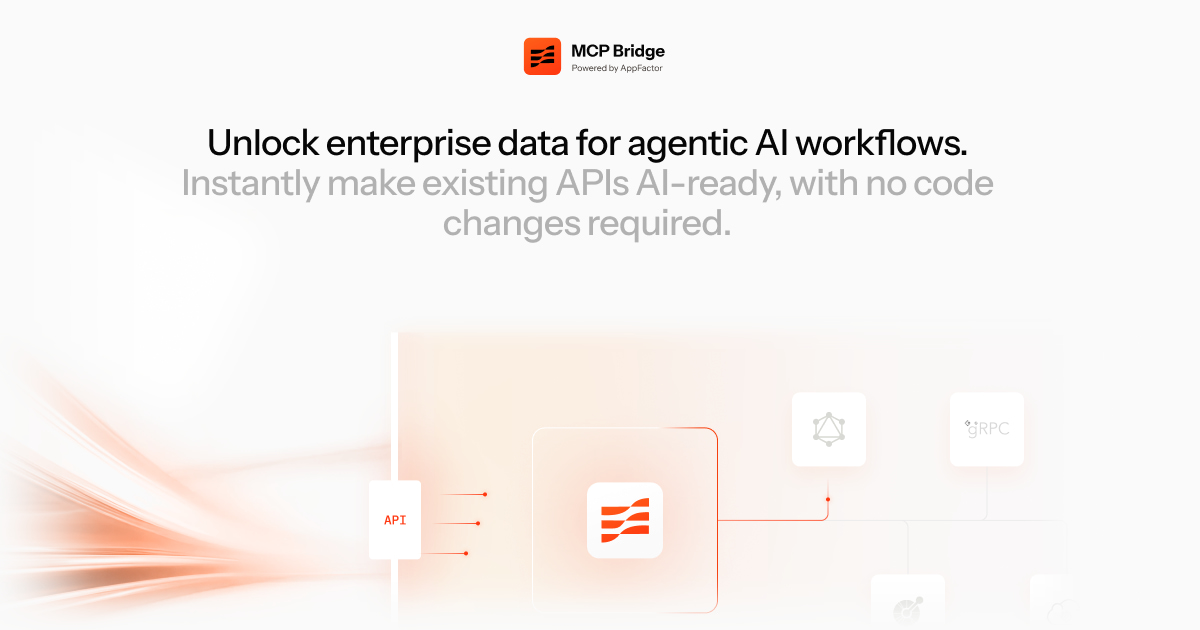
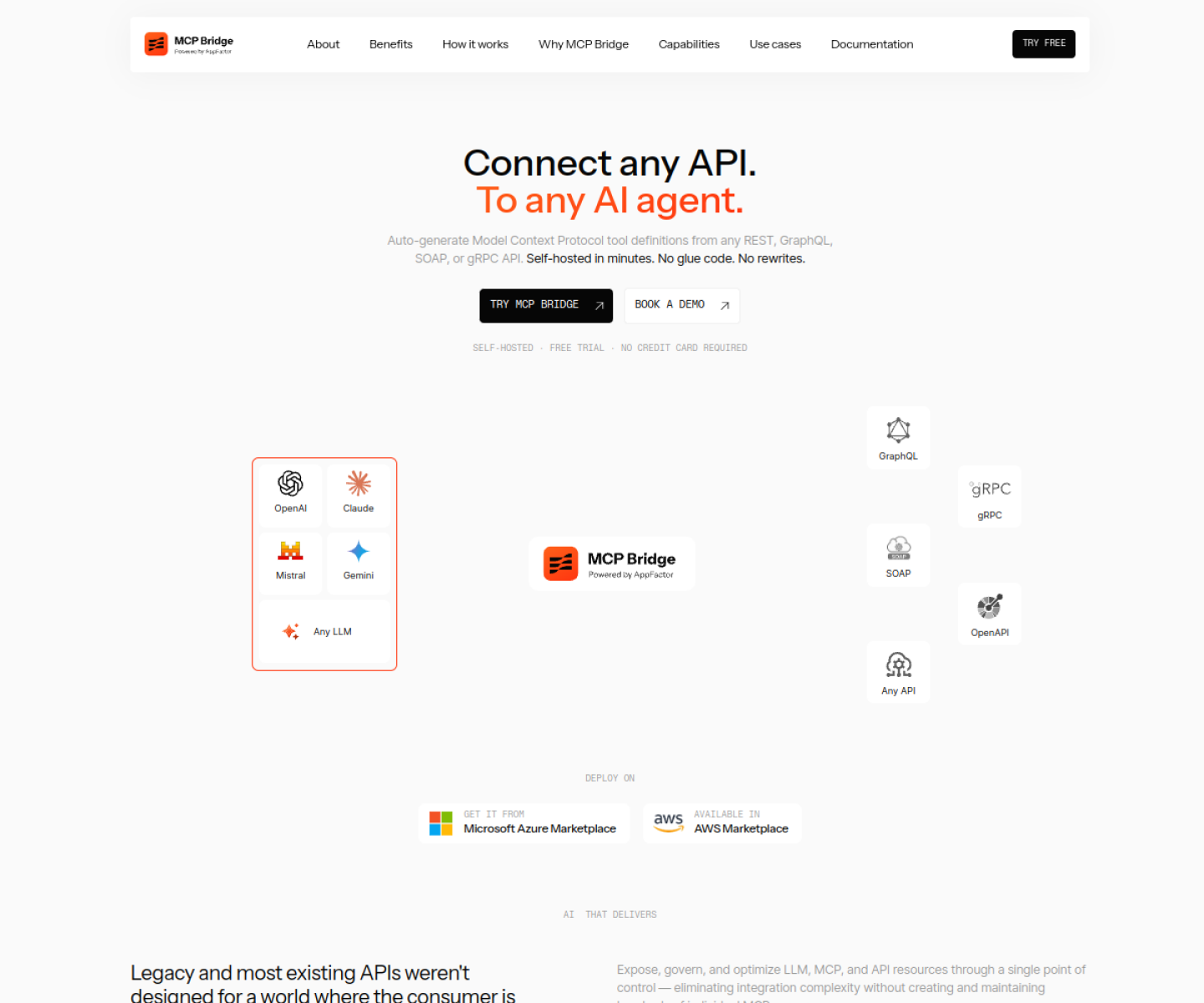
Self-hosted bridge that turns REST, GraphQL, SOAP, and gRPC APIs into MCP tools so AI agents can call enterprise systems without hand-written adapters.
AI Project Details
MCP Bridge review: Self-hosted bridge that turns REST, GraphQL, SOAP, and gRPC APIs into MCP tools so AI agents can call enterprise systems without hand-written adapters.
MCP Bridge is aimed at platform engineers and ai engineers who need governed api access for agents across internal or legacy systems. The current product materials describe a workflow built around point mcp bridge at an api schema, generate typed mcp tools automatically, configure auth and post-processing, then expose the resulting endpoint to mcp-compatible clients. That framing matters because many new AI launches still stop at a broad promise. MCP Bridge has a clearer job to do.
The stronger reason to care is operational fit. The official site is unusually detailed about schema support, auth handling, response post-processing, and self-hosted deployment. Its Code Mode angle is specific: replacing very large tool catalogs with a smaller meta-tool layer to reduce context waste. The bridge is built around API-to-agent translation rather than another generic integration marketplace.
How the workflow works
A sensible first pass is simple: start from the product's core entry point, validate the main loop on a representative task, and only then judge whether the surrounding automation is real. For MCP Bridge, that means users should point mcp bridge at an api schema, generate typed mcp tools automatically, configure auth and post-processing, then expose the resulting endpoint to mcp-compatible clients. If that loop feels shorter, clearer, or easier to control than the alternatives, the product is doing something useful.
Where MCP Bridge stands out
| Evaluation angle | Fit | Why it matters | | --- | --- | --- | | Best-fit user | High | Platform engineers and AI engineers who need governed API access for agents across internal or legacy systems. | | Core workflow clarity | High | Point MCP Bridge at an API schema, generate typed MCP tools automatically, configure auth and post-processing, then expose the resulting endpoint to MCP-compatible clients. | | Switching cost reducer | Medium to high | The official site is unusually detailed about schema support, auth handling, response post-processing, and self-hosted deployment. | | Adoption risk | Medium | Teams still need to decide which operations should be exposed to models and what guardrails belong around them. |
Practical use cases
- Turning internal APIs into MCP-compatible tools
- Reducing custom integration work for agent projects
- Self-hosting governed agent access to enterprise systems
Limits and buying notes
Teams still need to decide which operations should be exposed to models and what guardrails belong around them. The strongest value shows up where API sprawl already exists; smaller stacks may not need this much machinery. Pricing status today: The official site offers a free trial with no credit card required and marketplace deployment options. Detailed ongoing pricing tiers were not fully visible during review.
FAQ
What is MCP Bridge best for?
MCP Bridge is strongest when turning internal apis into mcp-compatible tools matters more than a generic AI demo. The official product materials position it around a concrete workflow rather than a blank chatbot shell.
Who should try MCP Bridge first?
Platform engineers and AI engineers who need governed API access for agents across internal or legacy systems. Teams with a real workflow match will get value faster than general curiosity users.
What should buyers verify before adopting MCP Bridge?
Teams still need to decide which operations should be exposed to models and what guardrails belong around them. The strongest value shows up where API sprawl already exists; smaller stacks may not need this much machinery. Pricing, privacy, and workflow fit should be checked directly on the current product before rollout.
Reviewed sources
- https://www.mcp-bridge.ai/
- https://docs.mcp-bridge.ai/
- https://www.producthunt.com/products/mcp-bridge-by-appfactor
FAQ
What is MCP Bridge best for?
MCP Bridge is strongest when turning internal apis into mcp-compatible tools matters more than a generic AI demo. The official product materials position it around a concrete workflow rather than a blank chatbot shell.
Who should try MCP Bridge first?
Platform engineers and AI engineers who need governed API access for agents across internal or legacy systems. Teams with a real workflow match will get value faster than general curiosity users.
What should buyers verify before adopting MCP Bridge?
Teams still need to decide which operations should be exposed to models and what guardrails belong around them. The strongest value shows up where API sprawl already exists; smaller stacks may not need this much machinery. Pricing, privacy, and workflow fit should be checked directly on the current product before rollout.