Memforks
Git-like memory system for AI agents, built to branch, preserve, and manage context instead of treating memory as one flat shared log.
AI Project Details
Memforks review: Git-like memory system for AI agents, built to branch, preserve, and manage context instead of treating memory as one flat shared log.
Memforks stands out because it is not just another chat shell. The product materials describe a system centered on set up memforks as the memory layer for an agent workflow, branch context when tasks diverge, and preserve or merge useful memory states instead of overwriting them blindly. That matters because the mechanism is the product, not a thin wrapper around a frontier model.
Why the architecture matters
Memforks stands out because it treats memory like versioned state rather than one permanent stream of facts. The product concept is immediately legible to developers because it borrows Git-style branching ideas for agent context. It addresses a real failure mode in agent systems: stale or conflicting memories accumulating without clear history control.
How to evaluate the core loop
Start by testing the narrowest real workflow the product claims to improve. For Memforks, that means users should set up memforks as the memory layer for an agent workflow, branch context when tasks diverge, and preserve or merge useful memory states instead of overwriting them blindly. The result should be easier to inspect, integrate, or control than a direct agent session.
Where it stands out
| Evaluation angle | Fit | Why it matters | | --- | --- | --- | | Best-fit user | High | Developers who want stronger control over agent memory history, branching, and rollback than a basic append-only memory layer can offer. | | Core workflow clarity | High | Set up Memforks as the memory layer for an agent workflow, branch context when tasks diverge, and preserve or merge useful memory states instead of overwriting them blindly. | | Switching cost reducer | Medium to high | Memforks stands out because it treats memory like versioned state rather than one permanent stream of facts. | | Adoption risk | Medium | The concept is most useful for recurring or branching agent work; lightweight one-shot tasks may not need this much memory structure. |
Practical use cases
- Branching memory for parallel agent tasks
- Managing context history and rollback in long-running agent systems
- Replacing flat memory logs with a more controlled memory model
Limits and buying notes
The concept is most useful for recurring or branching agent work; lightweight one-shot tasks may not need this much memory structure. Versioned memory is still only as good as the recall and pruning rules around it, so teams need to test behavior under real workloads. Pricing status today: Memforks is presented as an open-source project in the reviewed official sources, and those sources did not expose separate hosted pricing.
FAQ
What is Memforks best for?
Memforks is strongest when branching memory for parallel agent tasks matters more than a generic AI demo. The official product materials position it around a concrete workflow rather than a blank chatbot shell.
Who should try Memforks first?
Developers who want stronger control over agent memory history, branching, and rollback than a basic append-only memory layer can offer. Teams with a real workflow match will get value faster than general curiosity users.
What should buyers verify before adopting Memforks?
The concept is most useful for recurring or branching agent work; lightweight one-shot tasks may not need this much memory structure. Versioned memory is still only as good as the recall and pruning rules around it, so teams need to test behavior under real workloads. Pricing, privacy, and workflow fit should be checked directly on the current product before rollout.
Reviewed sources
- https://memforks.dev/
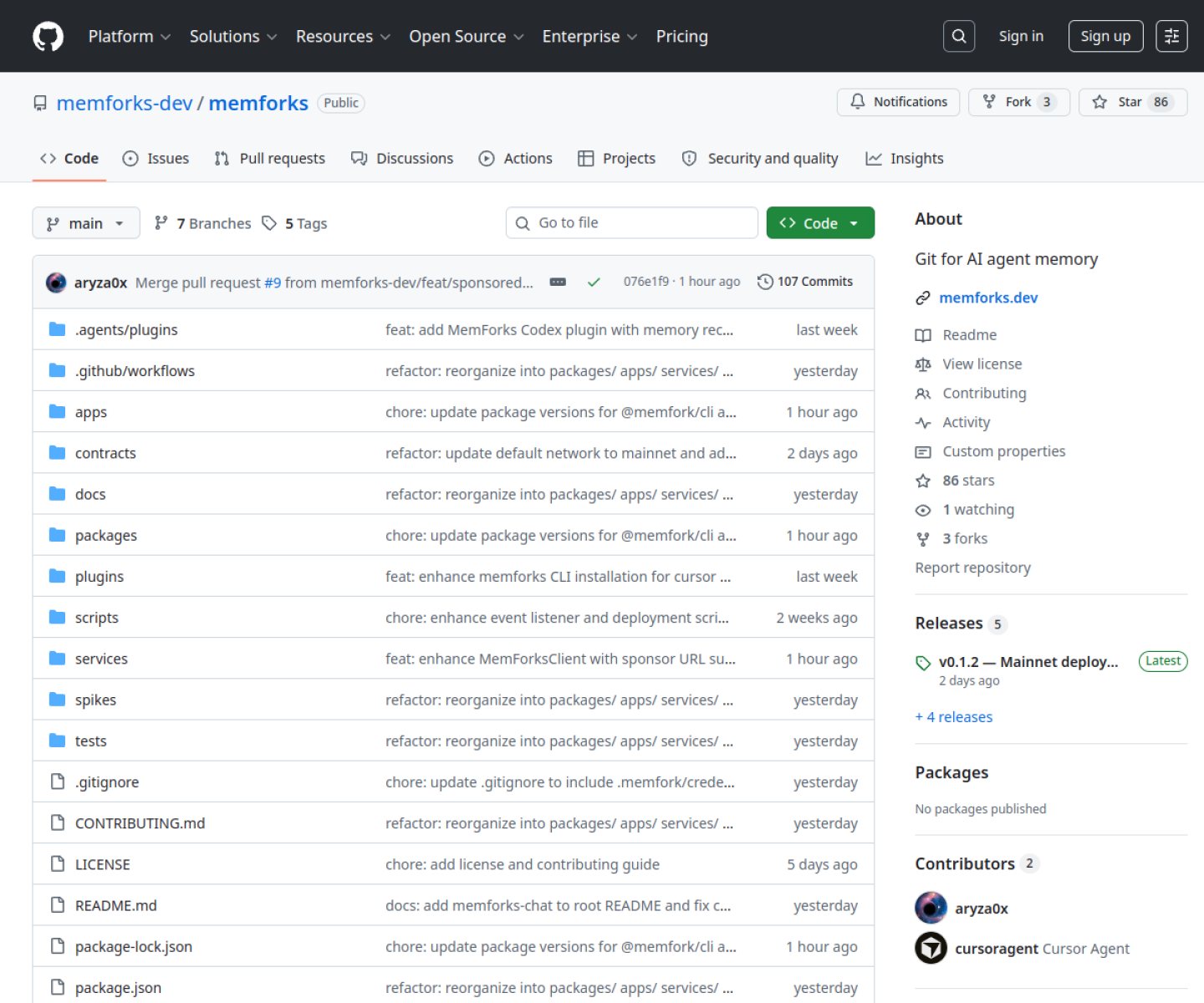
- https://github.com/memforks-dev/memforks
FAQ
What is Memforks best for?
Memforks is strongest when branching memory for parallel agent tasks matters more than a generic AI demo. The official product materials position it around a concrete workflow rather than a blank chatbot shell.
Who should try Memforks first?
Developers who want stronger control over agent memory history, branching, and rollback than a basic append-only memory layer can offer. Teams with a real workflow match will get value faster than general curiosity users.
What should buyers verify before adopting Memforks?
The concept is most useful for recurring or branching agent work; lightweight one-shot tasks may not need this much memory structure. Versioned memory is still only as good as the recall and pruning rules around it, so teams need to test behavior under real workloads. Pricing, privacy, and workflow fit should be checked directly on the current product before rollout.