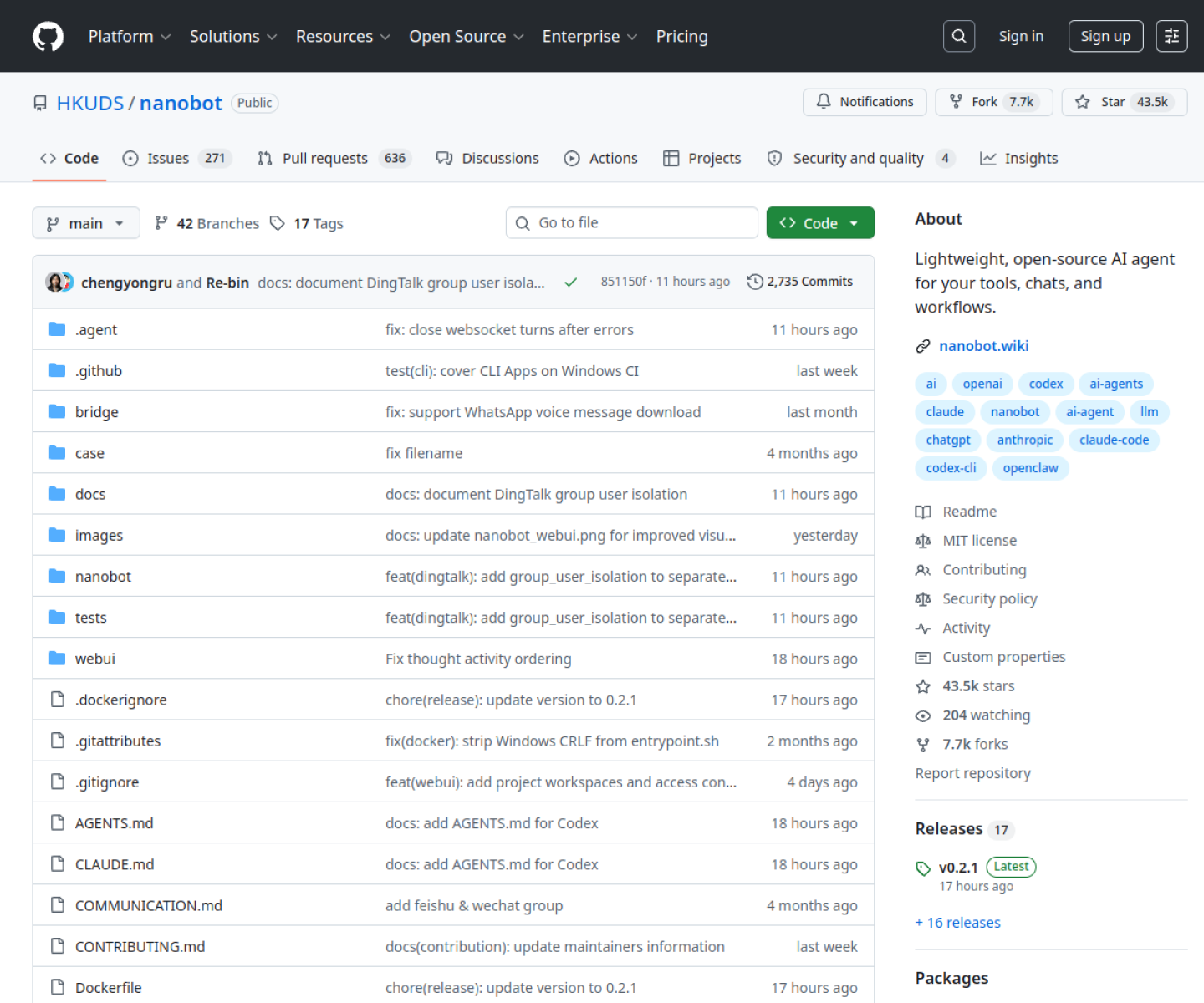
nanobot
Lightweight open-source personal agent companion for tools, chats, files, web workflows, and persistent memory.
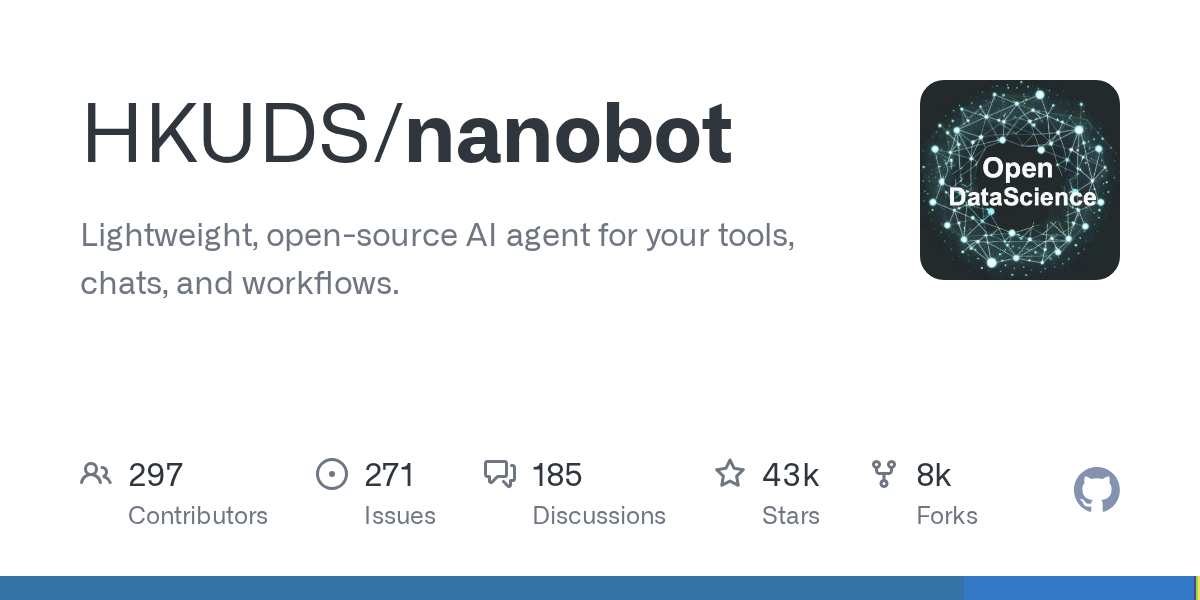
AI Project Details
nanobot review: Lightweight open-source personal agent companion for tools, chats, files, web workflows, and persistent memory.
nanobot is aimed at power users who want a local-first agent companion that stays with their workflows across chat, files, and automations. The current product materials describe a workflow built around install the project, connect preferred providers and tools, keep memory across sessions, and use the agent as a persistent assistant across personal workflows. That matters because many new AI launches still sound broad until you try to map them to an actual job.
The reason this tool stands out is practical fit. nanobot positions itself as a personal companion that can stay with the user across tools rather than as a single narrow app. The public roadmap and repo make the product direction visible instead of hiding behind generic agent language. It is newly notable because the May 2026 roadmap refresh clarified the long-term product shape and local-first angle.
How the workflow works
The fastest way to judge nanobot is to walk the main loop on one real task. For this product, users should install the project, connect preferred providers and tools, keep memory across sessions, and use the agent as a persistent assistant across personal workflows. If that loop feels clearer, more controllable, or easier to repeat than the alternatives, the product is doing useful work.
Where nanobot stands out
| Evaluation angle | Fit | Why it matters | | --- | --- | --- | | Best-fit user | High | Power users who want a local-first agent companion that stays with their workflows across chat, files, and automations. | | Core workflow clarity | High | Install the project, connect preferred providers and tools, keep memory across sessions, and use the agent as a persistent assistant across personal workflows. | | Switching cost reducer | Medium to high | nanobot positions itself as a personal companion that can stay with the user across tools rather than as a single narrow app. | | Adoption risk | Medium | Users should validate what is already polished versus what is still roadmap-driven before betting on it as a daily assistant. |
Practical use cases
- Keeping one agent companion across files, web tasks, and chats
- Maintaining personal memory across recurring agent sessions
- Experimenting with a local-first assistant that can grow with custom workflows
Limits and buying notes
Users should validate what is already polished versus what is still roadmap-driven before betting on it as a daily assistant. The project is a better fit for technical users who can tolerate evolving open-source agent ergonomics than for mainstream plug-and-play buyers. Pricing status today: nanobot is open source on GitHub; no public paid pricing table was visible during review.
FAQ
What is nanobot best for?
nanobot works best when keeping one agent companion across files, web tasks, and chats matters more than using a generic assistant. The official materials point to a more concrete workflow than a blank AI shell.
Who should try nanobot first?
Power users who want a local-first agent companion that stays with their workflows across chat, files, and automations. Teams with that exact workflow will learn faster than broad curiosity users.
What should users verify before adopting nanobot?
Users should validate what is already polished versus what is still roadmap-driven before betting on it as a daily assistant. The project is a better fit for technical users who can tolerate evolving open-source agent ergonomics than for mainstream plug-and-play buyers. Users should also check the current docs, pricing, and release status before rollout.
Reviewed sources
- https://github.com/HKUDS/nanobot
- https://github.com/HKUDS/nanobot/discussions/431
FAQ
What is nanobot best for?
nanobot works best when keeping one agent companion across files, web tasks, and chats matters more than using a generic assistant. The official materials point to a more concrete workflow than a blank AI shell.
Who should try nanobot first?
Power users who want a local-first agent companion that stays with their workflows across chat, files, and automations. Teams with that exact workflow will learn faster than broad curiosity users.
What should users verify before adopting nanobot?
Users should validate what is already polished versus what is still roadmap-driven before betting on it as a daily assistant. The project is a better fit for technical users who can tolerate evolving open-source agent ergonomics than for mainstream plug-and-play buyers. Users should also check the current docs, pricing, and release status before rollout.