Obsidian Wiki
Framework for AI agents to build and maintain a digital brain in Obsidian using wiki-style knowledge patterns instead of a purely opaque memory layer.
AI Project Details
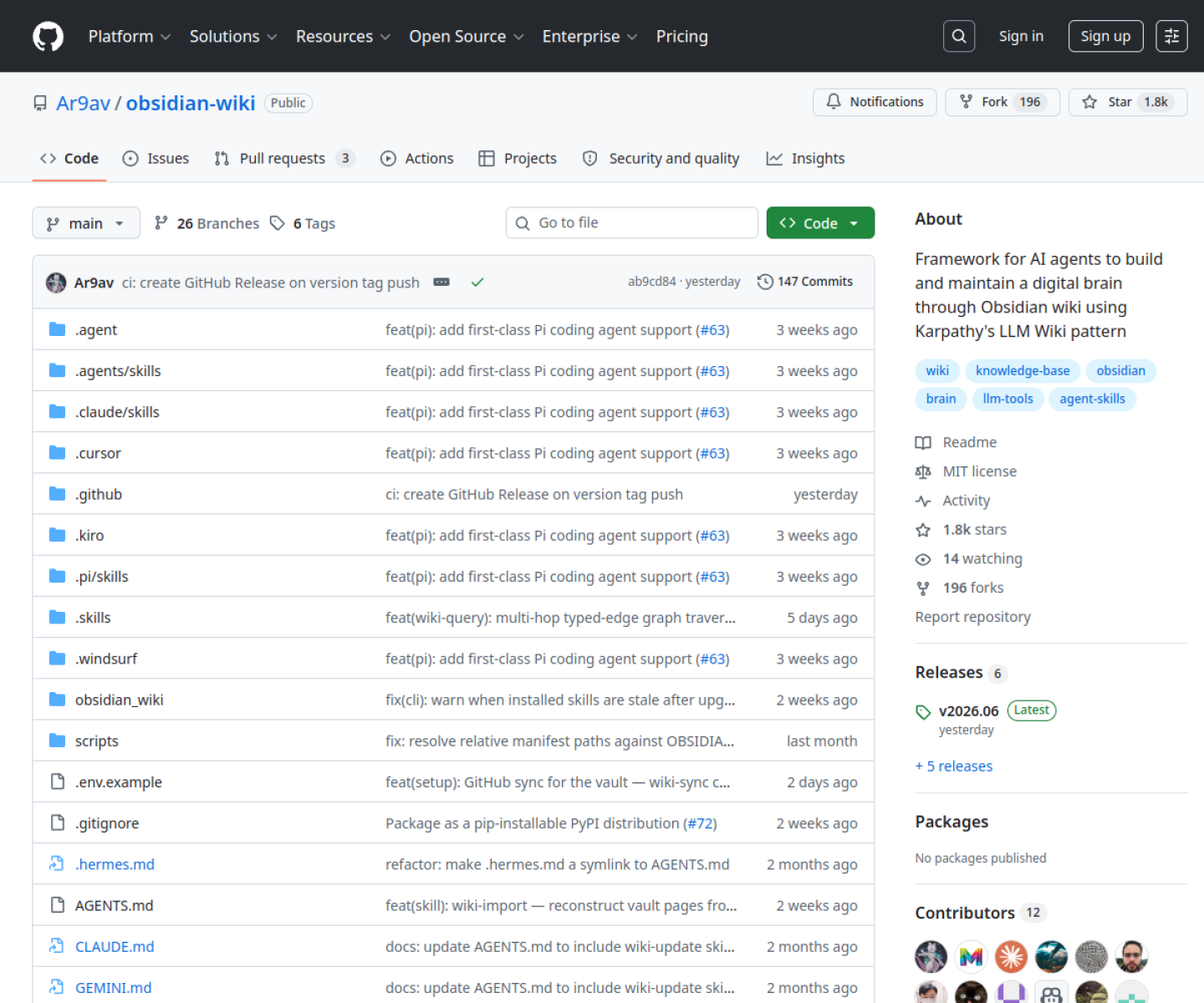
Obsidian Wiki review: Framework for AI agents to build and maintain a digital brain in Obsidian using wiki-style knowledge patterns instead of a purely opaque memory layer.
Obsidian Wiki stands out because it is not just another chat shell. The product materials describe a system centered on connect the framework to an obsidian vault, let the agent create and update structured knowledge pages, and keep long-lived memory in a human-readable wiki format. That matters because the mechanism is the product, not a thin wrapper around a frontier model.
Why the architecture matters
The project treats memory as a visible knowledge base rather than a hidden store, which changes how teams can inspect and fix it. Its Obsidian-first framing makes the output legible to humans who already work in markdown knowledge systems. The repo stands out because it turns a familiar tool into an operational memory surface for agents instead of inventing another proprietary memory UI.
How to evaluate the core loop
Start by testing the narrowest real workflow the product claims to improve. For Obsidian Wiki, that means users should connect the framework to an obsidian vault, let the agent create and update structured knowledge pages, and keep long-lived memory in a human-readable wiki format. The result should be easier to inspect, integrate, or control than a direct agent session.
Where it stands out
| Evaluation angle | Fit | Why it matters | | --- | --- | --- | | Best-fit user | High | Power users and builders who want agent memory to stay inspectable and editable in a note system they already understand. | | Core workflow clarity | High | Connect the framework to an Obsidian vault, let the agent create and update structured knowledge pages, and keep long-lived memory in a human-readable wiki format. | | Switching cost reducer | Medium to high | The project treats memory as a visible knowledge base rather than a hidden store, which changes how teams can inspect and fix it. | | Adoption risk | Medium | Wiki-style memory still needs curation, because readable notes can drift or bloat just as easily as vector entries. |
Practical use cases
- Keeping AI-agent memory in an inspectable Obsidian vault
- Building a durable digital brain from recurring agent work
- Turning long-lived agent context into editable markdown knowledge
Limits and buying notes
Wiki-style memory still needs curation, because readable notes can drift or bloat just as easily as vector entries. The strongest fit is for users who already want durable knowledge artifacts, not for throwaway short-lived agent sessions. Pricing status today: Obsidian Wiki is distributed as an open-source repository, and the reviewed public materials did not show a separate commercial pricing model.
FAQ
What is Obsidian Wiki best for?
Obsidian Wiki is strongest when keeping ai-agent memory in an inspectable obsidian vault matters more than a generic AI demo. The official product materials position it around a concrete workflow rather than a blank chatbot shell.
Who should try Obsidian Wiki first?
Power users and builders who want agent memory to stay inspectable and editable in a note system they already understand. Teams with a real workflow match will get value faster than general curiosity users.
What should buyers verify before adopting Obsidian Wiki?
Wiki-style memory still needs curation, because readable notes can drift or bloat just as easily as vector entries. The strongest fit is for users who already want durable knowledge artifacts, not for throwaway short-lived agent sessions. Pricing, privacy, and workflow fit should be checked directly on the current product before rollout.
Reviewed sources
- https://github.com/Ar9av/obsidian-wiki
- https://github.com/Ar9av/obsidian-wiki/releases
FAQ
What is Obsidian Wiki best for?
Obsidian Wiki is strongest when keeping ai-agent memory in an inspectable obsidian vault matters more than a generic AI demo. The official product materials position it around a concrete workflow rather than a blank chatbot shell.
Who should try Obsidian Wiki first?
Power users and builders who want agent memory to stay inspectable and editable in a note system they already understand. Teams with a real workflow match will get value faster than general curiosity users.
What should buyers verify before adopting Obsidian Wiki?
Wiki-style memory still needs curation, because readable notes can drift or bloat just as easily as vector entries. The strongest fit is for users who already want durable knowledge artifacts, not for throwaway short-lived agent sessions. Pricing, privacy, and workflow fit should be checked directly on the current product before rollout.