Patchrooms
Visual feedback layer for AI-built apps that turns comments, screenshots, voice notes, and console context into agent-ready patch instructions.
AI Project Details
Patchrooms review: Visual feedback layer for AI-built apps that turns comments, screenshots, voice notes, and console context into agent-ready patch instructions.
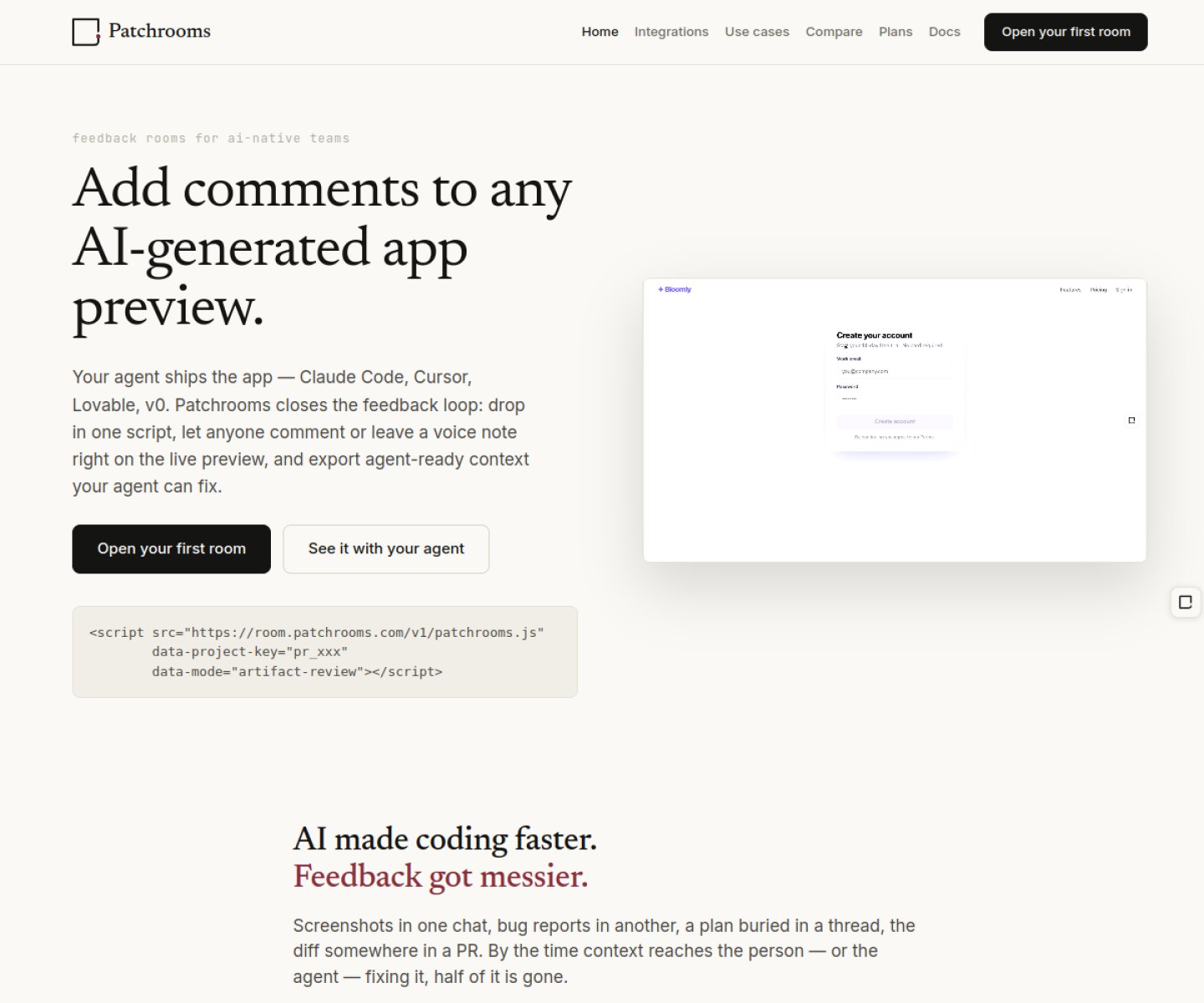
Patchrooms is aimed at tiny software teams using ai coding agents that need a cleaner review loop than scattered screenshots, chats, and bug tickets. The current product materials describe a workflow built around drop one script into a staging or preview build, let reviewers comment directly on the live artifact, then export the resulting room as markdown or let agents read it through the mcp server. That makes the page easier to read as an operating model, not just a brand claim.
Why it is timely
Patchrooms is centered on feedback quality for AI-built artifacts, not on generating the app itself. The official site is unusually concrete about screenshots, annotations, voice transcription, agent plans, MCP access, and room-based review. Its integration language is practical because it names the exact agent tools and preview workflow it is trying to improve.
How the workflow works in practice
A sensible first pass is to start from the product's main entry point and test the shortest path to value. For Patchrooms, that means users should drop one script into a staging or preview build, let reviewers comment directly on the live artifact, then export the resulting room as markdown or let agents read it through the mcp server. If that loop reduces review drag, coordination, or governance work, the product is doing something real.
Where Patchrooms stands out
| Evaluation angle | Fit | Why it matters | | --- | --- | --- | | Best-fit user | High | Tiny software teams using AI coding agents that need a cleaner review loop than scattered screenshots, chats, and bug tickets. | | Core workflow clarity | High | Drop one script into a staging or preview build, let reviewers comment directly on the live artifact, then export the resulting room as Markdown or let agents read it through the MCP server. | | Switching cost reducer | Medium to high | Patchrooms is centered on feedback quality for AI-built artifacts, not on generating the app itself. | | Adoption risk | Medium | The product is most compelling for teams already shipping AI-generated previews often enough that review context becomes a recurring problem. |
Practical use cases
- Reviewing AI-generated app previews without losing issue context
- Handing Claude Code or Cursor cleaner bug and patch context
- Collecting voice notes, screenshots, and comments in one review room
Limits and buying notes
The product is most compelling for teams already shipping AI-generated previews often enough that review context becomes a recurring problem. Prospective buyers should still check how well the room model fits their existing ticketing and approval process. Pricing status today: Patchrooms currently presents itself as an early-access product with no card required, and the reviewed public sources did not expose a full tier table.
FAQ
What is Patchrooms best for?
Patchrooms is strongest when reviewing ai-generated app previews without losing issue context matters more than a generic AI demo. The official product materials position it around a concrete workflow rather than a blank chatbot shell.
Who should try Patchrooms first?
Tiny software teams using AI coding agents that need a cleaner review loop than scattered screenshots, chats, and bug tickets. Teams with a real workflow match will get value faster than general curiosity users.
What should buyers verify before adopting Patchrooms?
The product is most compelling for teams already shipping AI-generated previews often enough that review context becomes a recurring problem. Prospective buyers should still check how well the room model fits their existing ticketing and approval process. Pricing, privacy, and workflow fit should be checked directly on the current product before rollout.
Reviewed sources
- https://patchrooms.com/
- https://docs.patchrooms.com/
- https://www.producthunt.com/products/patchrooms
FAQ
What is Patchrooms best for?
Patchrooms is strongest when reviewing ai-generated app previews without losing issue context matters more than a generic AI demo. The official product materials position it around a concrete workflow rather than a blank chatbot shell.
Who should try Patchrooms first?
Tiny software teams using AI coding agents that need a cleaner review loop than scattered screenshots, chats, and bug tickets. Teams with a real workflow match will get value faster than general curiosity users.
What should buyers verify before adopting Patchrooms?
The product is most compelling for teams already shipping AI-generated previews often enough that review context becomes a recurring problem. Prospective buyers should still check how well the room model fits their existing ticketing and approval process. Pricing, privacy, and workflow fit should be checked directly on the current product before rollout.