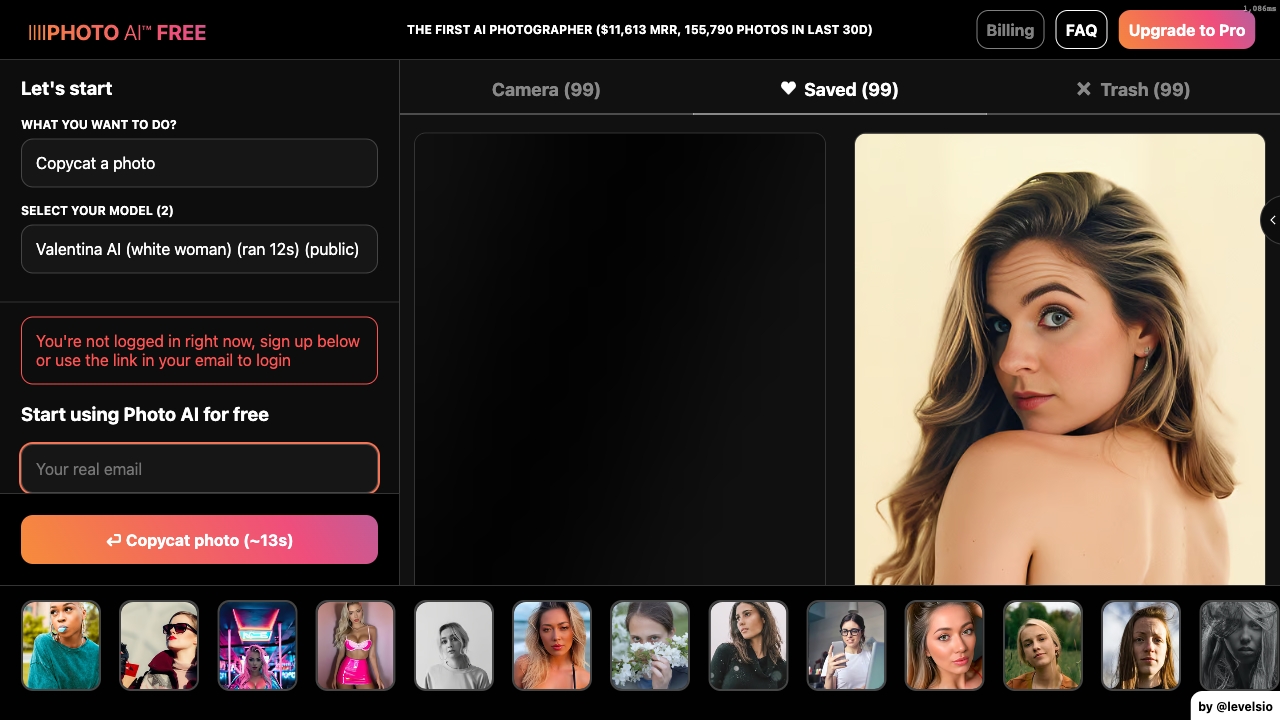
Photo AI
Create Stunning Photos with Photo AI – No Camera Needed Are you looking to create breathtaking images without the hassle of a camera? Look no further! With Photo AI, you can effortlessly generate realistic photos that capture the essence of your vision. Why Choose Photo AI? 1. Cost-Effective: Save on photographer expenses while still achieving high-quality results. 2. User-Friendly: No photography skills required; simply input your ideas and let the AI do the rest. 3. Versatile Applications: Perfect for marketing, social media, or personal projects. Experience the future of photography with Photo AI and unlock your creative potential today!
AI Project Details
Photo AI review: AI photographer for model, product, and social photo generation
Photo AI positions itself as an AI photographer. Its public product pages describe training an AI model from user photos and generating new images of that person, including headshots, dating photos, fashion-style shoots, travel scenes, product-style visuals, and social content.
This is a powerful but sensitive category. The practical promise is reduced studio cost and faster creative iteration. The practical risk is misuse of likeness, unrealistic representation, deceptive advertising, or images that imply a person was somewhere or did something they did not actually do.
Best-fit use cases
| Use case | Photo AI fit | Notes | |---|---:|---| | Personal headshots and creator photos | High | Strong fit when the user owns and consents to the likeness. | | Fashion and outfit ideation | Medium to high | Useful for visual concepts, but fit and product accuracy need review. | | Product or lifestyle mockups | Medium | Helpful for ideation; commercial accuracy must be checked. | | Dating or social profile photos | Medium | Can improve presentation, but misleading realism is a trust risk. | | Photos of other people without consent | Low | Do not use likeness tools without permission. |
Quality and safety checks
Before using Photo AI commercially, verify model consent, training-photo rights, data handling, deletion controls, output licensing, brand suitability, face consistency, body realism, watermark or disclosure needs, and whether the generated scene could mislead viewers.
For SEO and indexing quality, the page should not simply say "generate AI photos." It should explain who the tool is for, how likeness training changes the risk profile, and where AI-generated realism needs human judgment.
Strengths
- Clear AI photographer positioning with use cases beyond simple filters.
- Useful for headshots, creator visuals, fashion concepts, and rapid visual experimentation.
- Can reduce the cost of early-stage photoshoot ideation.
Limitations
- Likeness generation requires strong consent and rights discipline.
- Outputs may misrepresent a person, product, location, or event if published without context.
- Commercial users still need legal, brand, and quality review.
Bottom line
Photo AI should be indexed as an AI photographer and likeness-based image generation tool. It is most useful when the subject is the consenting user and the output is reviewed as creative media, not treated as documentary proof.
Sources reviewed: Photo AI homepage, Photo AI AI photographer page, Photo AI FAQ.
FAQ
What is Photo AI best for?
Photo AI is best for generating AI photos of a consenting subject, including headshots, creator images, fashion-style photos, social profile pictures, and visual concepts.
Can Photo AI replace a professional photoshoot?
It can replace some early concept or personal image needs, but commercial campaigns, product accuracy, and brand-sensitive shoots still require human review and often real photography.
What is the biggest risk with Photo AI?
The biggest risk is misuse of a person's likeness or publishing realistic generated images in a context that misleads viewers about identity, location, activity, or endorsement.