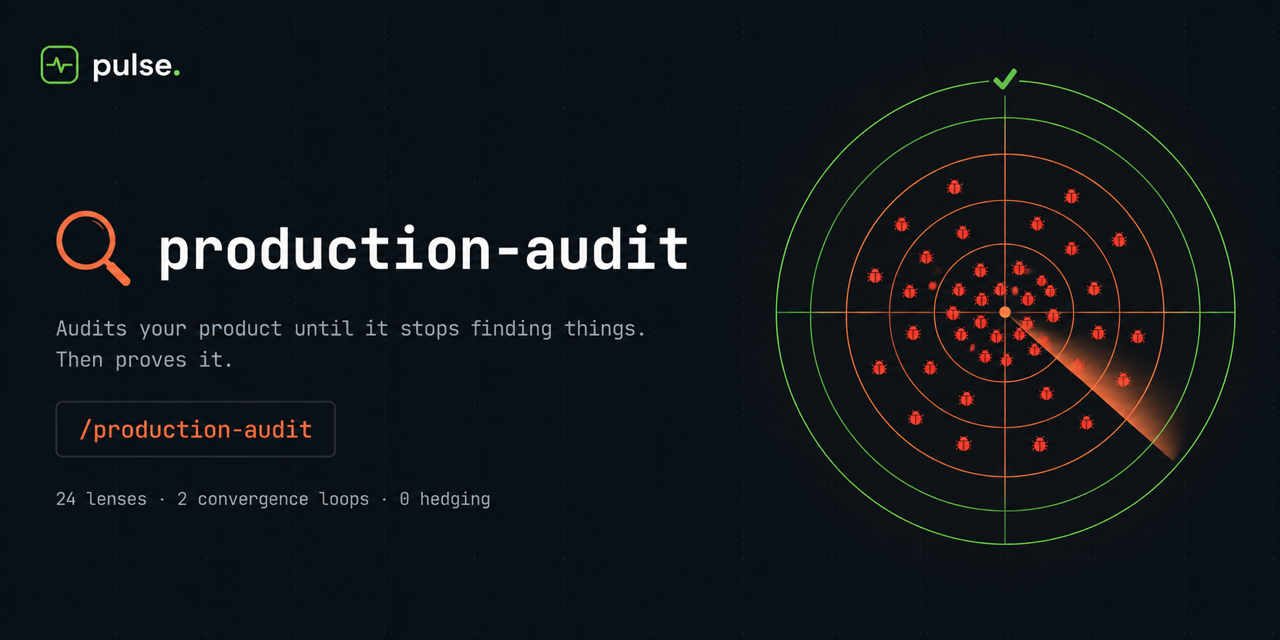
production-audit
Iterative product auditing skill for Claude Code and similar coding-agent setups that keeps sweeping a codebase through different defect lenses until it stops finding new high-signal issues.
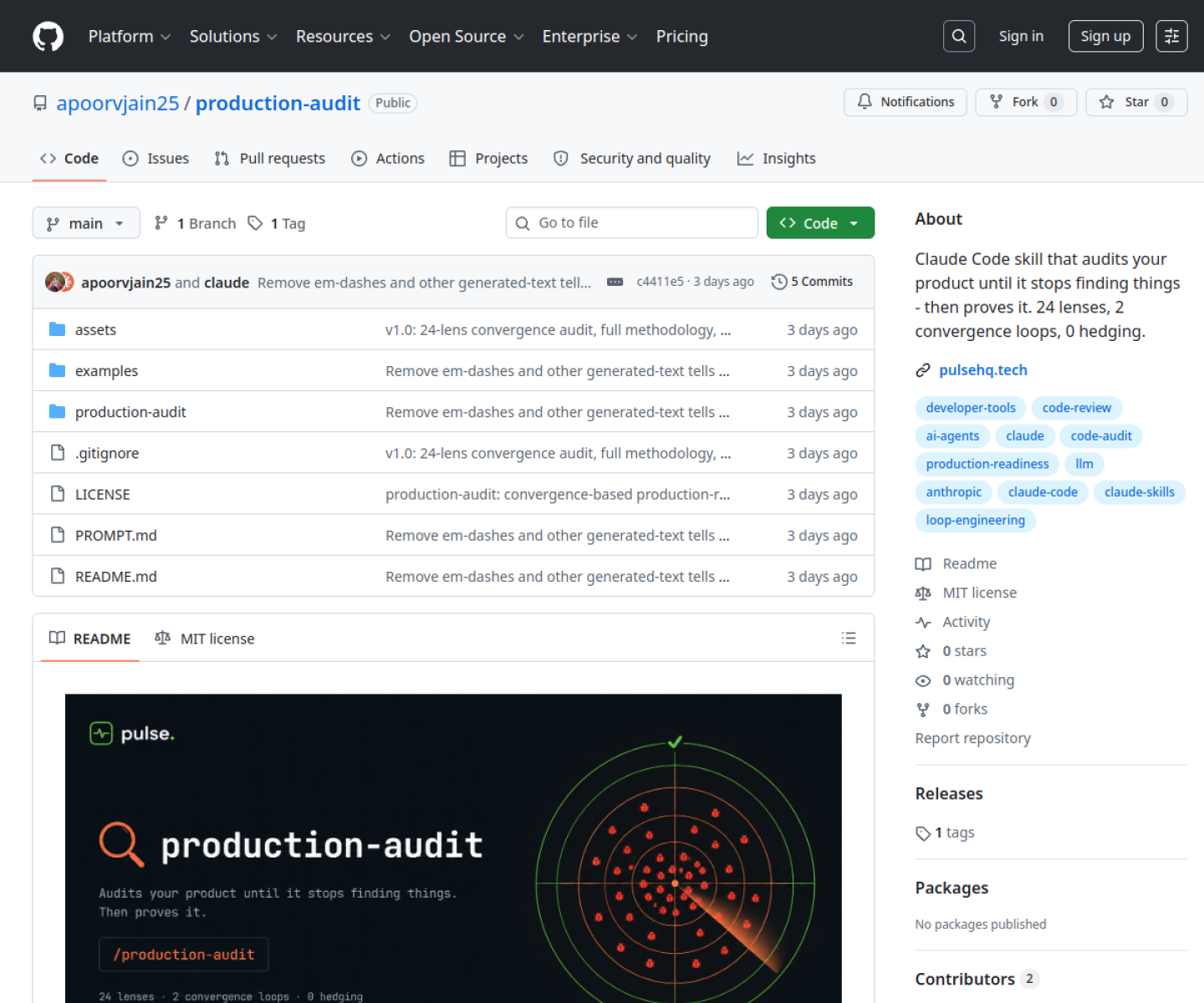
AI Project Details
production-audit review: Iterative product auditing skill for Claude Code and similar coding-agent setups that keeps sweeping a codebase through different defect lenses until it stops finding new high-signal issues.
production-audit is aimed at engineering teams and solo builders who want a more adversarial audit loop than a one-pass code review prompt before trusting an ai-generated or fast-moving product change. The current product materials describe a workflow built around run the audit skill against a codebase, let it inventory product surfaces, sweep them through multiple audit lenses, verify suspected findings against the real code, then rerun after fixes until the issue stream goes quiet. That makes the page easier to read as an operating model, not just a brand claim.
Why it is timely
production-audit is centered on convergence rather than one-pass review, which is a stronger operating model for AI-heavy codebases than a single reassuring report. The README is unusually specific about lens coverage, verification passes, and the rule that every finding must be pinned to a concrete location. Its strongest value is methodological: it treats bug discovery as a repeated search problem instead of a prompt-writing trick.
How the workflow works in practice
A sensible first pass is to start from the product's main entry point and test the shortest path to value. For production-audit, that means users should run the audit skill against a codebase, let it inventory product surfaces, sweep them through multiple audit lenses, verify suspected findings against the real code, then rerun after fixes until the issue stream goes quiet. If that loop reduces review drag, coordination, or governance work, the product is doing something real.
Where production-audit stands out
| Evaluation angle | Fit | Why it matters | | --- | --- | --- | | Best-fit user | High | Engineering teams and solo builders who want a more adversarial audit loop than a one-pass code review prompt before trusting an AI-generated or fast-moving product change. | | Core workflow clarity | High | Run the audit skill against a codebase, let it inventory product surfaces, sweep them through multiple audit lenses, verify suspected findings against the real code, then rerun after fixes until the issue stream goes quiet. | | Switching cost reducer | Medium to high | production-audit is centered on convergence rather than one-pass review, which is a stronger operating model for AI-heavy codebases than a single reassuring report. | | Adoption risk | Medium | The workflow is intentionally heavy, so it makes more sense for serious review passes than for quick casual feedback on a tiny change. |
Practical use cases
- Running repeated AI-assisted audits until new findings taper off
- Stress-testing products built quickly with coding agents
- Generating concrete file-linked findings instead of vague review summaries
Limits and buying notes
The workflow is intentionally heavy, so it makes more sense for serious review passes than for quick casual feedback on a tiny change. Teams still need to prioritize and fix what the audit finds; the skill improves discovery discipline but does not replace engineering judgment or testing. Pricing status today: production-audit is published as an MIT-licensed open-source skill, and the reviewed public sources did not show a separate commercial pricing page.
FAQ
What is production-audit best for?
production-audit is strongest when running repeated ai-assisted audits until new findings taper off matters more than a generic AI demo. The official product materials position it around a concrete workflow rather than a blank chatbot shell.
Who should try production-audit first?
Engineering teams and solo builders who want a more adversarial audit loop than a one-pass code review prompt before trusting an AI-generated or fast-moving product change. Teams with a real workflow match will get value faster than general curiosity users.
What should buyers verify before adopting production-audit?
The workflow is intentionally heavy, so it makes more sense for serious review passes than for quick casual feedback on a tiny change. Teams still need to prioritize and fix what the audit finds; the skill improves discovery discipline but does not replace engineering judgment or testing. Pricing, privacy, and workflow fit should be checked directly on the current product before rollout.
Reviewed sources
- https://github.com/apoorvjain25/production-audit
- https://raw.githubusercontent.com/apoorvjain25/production-audit/main/README.md
- https://news.ycombinator.com/item?id=48537246
FAQ
What is production-audit best for?
production-audit is strongest when running repeated ai-assisted audits until new findings taper off matters more than a generic AI demo. The official product materials position it around a concrete workflow rather than a blank chatbot shell.
Who should try production-audit first?
Engineering teams and solo builders who want a more adversarial audit loop than a one-pass code review prompt before trusting an AI-generated or fast-moving product change. Teams with a real workflow match will get value faster than general curiosity users.
What should buyers verify before adopting production-audit?
The workflow is intentionally heavy, so it makes more sense for serious review passes than for quick casual feedback on a tiny change. Teams still need to prioritize and fix what the audit finds; the skill improves discovery discipline but does not replace engineering judgment or testing. Pricing, privacy, and workflow fit should be checked directly on the current product before rollout.