shutup-mcp
Open-source MCP proxy that hides most tool definitions until they are needed, reducing prompt bloat for agents connected to large tool catalogs.
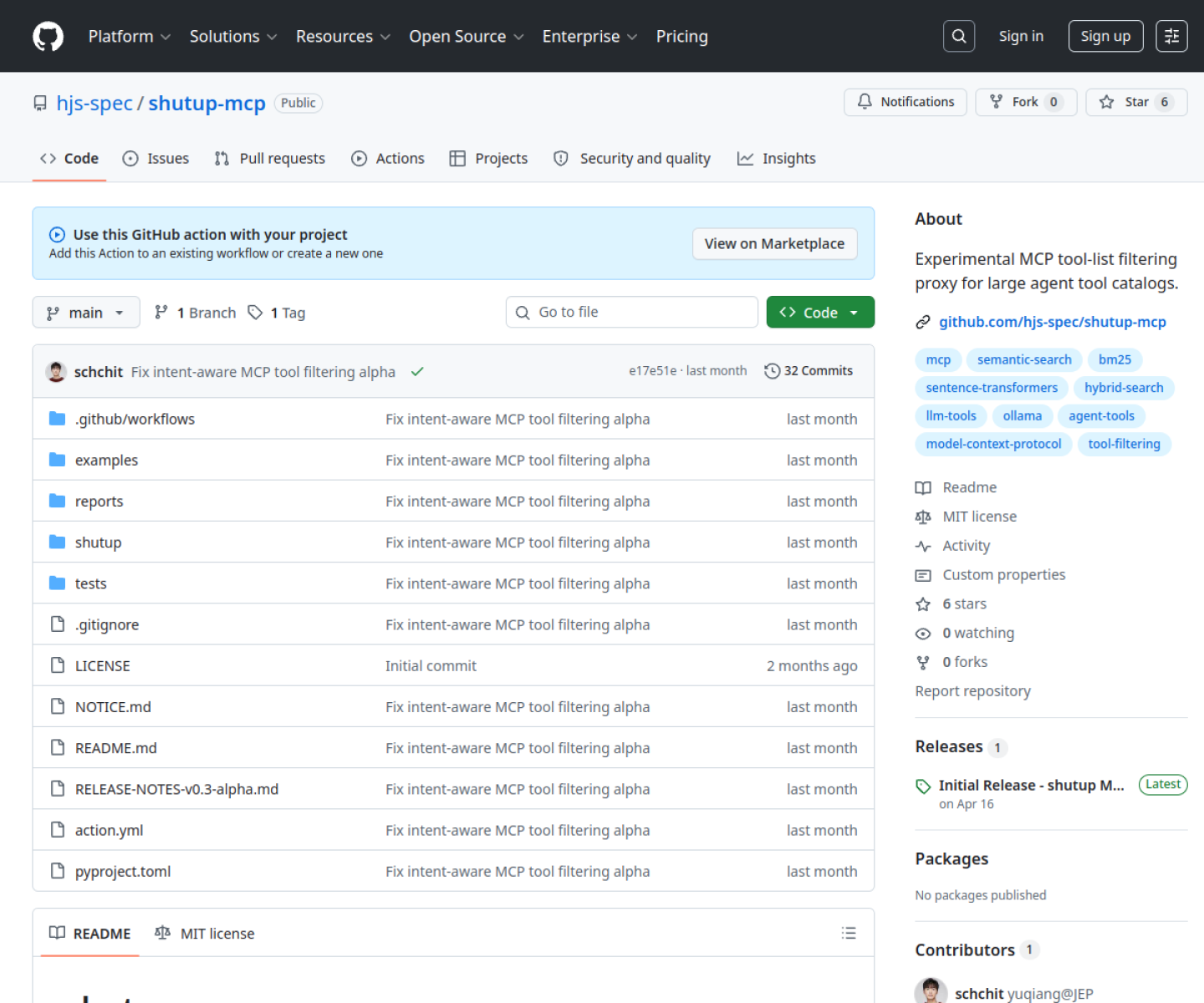
AI Project Details
shutup-mcp review: Open-source MCP proxy that hides most tool definitions until they are needed, reducing prompt bloat for agents connected to large tool catalogs.
shutup-mcp is aimed at developers and agent builders hitting context-window waste when one client is connected to too many mcp servers or overly large tool lists. The current product materials describe a workflow built around place the proxy between the mcp client and existing servers, let it inspect the request, and expose only the most relevant tools instead of dumping the whole catalog into context. That framing matters because many new AI launches still stop at a broad promise. shutup-mcp has a clearer job to do.
The stronger reason to care is operational fit. The project is narrowly focused on one real MCP pain point: tool descriptions consuming context before useful work starts. Its public launch notes include a concrete claim around large token reduction rather than vague performance promises. Because it is a proxy instead of another server, teams can test it without rebuilding every underlying integration.
How the workflow works
A sensible first pass is simple: start from the product's core entry point, validate the main loop on a representative task, and only then judge whether the surrounding automation is real. For shutup-mcp, that means users should place the proxy between the mcp client and existing servers, let it inspect the request, and expose only the most relevant tools instead of dumping the whole catalog into context. If that loop feels shorter, clearer, or easier to control than the alternatives, the product is doing something useful.
Where shutup-mcp stands out
| Evaluation angle | Fit | Why it matters | | --- | --- | --- | | Best-fit user | High | Developers and agent builders hitting context-window waste when one client is connected to too many MCP servers or overly large tool lists. | | Core workflow clarity | High | Place the proxy between the MCP client and existing servers, let it inspect the request, and expose only the most relevant tools instead of dumping the whole catalog into context. | | Switching cost reducer | Medium to high | The project is narrowly focused on one real MCP pain point: tool descriptions consuming context before useful work starts. | | Adoption risk | Medium | The fit depends on already having a large MCP surface area; small tool catalogs may not justify another layer. |
Practical use cases
- Reducing MCP token overhead in coding agents
- Filtering large tool catalogs before they hit the model
- Improving agent tool selection in overloaded environments
Limits and buying notes
The fit depends on already having a large MCP surface area; small tool catalogs may not justify another layer. Teams should validate routing accuracy before trusting a filter to hide tools the model might still need. Pricing status today: The reviewed official sources show an open-source GitHub project. A separate commercial pricing page was not visible during review.
FAQ
What is shutup-mcp best for?
shutup-mcp is strongest when reducing mcp token overhead in coding agents matters more than a generic AI demo. The official product materials position it around a concrete workflow rather than a blank chatbot shell.
Who should try shutup-mcp first?
Developers and agent builders hitting context-window waste when one client is connected to too many MCP servers or overly large tool lists. Teams with a real workflow match will get value faster than general curiosity users.
What should buyers verify before adopting shutup-mcp?
The fit depends on already having a large MCP surface area; small tool catalogs may not justify another layer. Teams should validate routing accuracy before trusting a filter to hide tools the model might still need. Pricing, privacy, and workflow fit should be checked directly on the current product before rollout.
Reviewed sources
- https://github.com/hjs-spec/shutup-mcp
- https://www.producthunt.com/products/shutup-mcp
FAQ
What is shutup-mcp best for?
shutup-mcp is strongest when reducing mcp token overhead in coding agents matters more than a generic AI demo. The official product materials position it around a concrete workflow rather than a blank chatbot shell.
Who should try shutup-mcp first?
Developers and agent builders hitting context-window waste when one client is connected to too many MCP servers or overly large tool lists. Teams with a real workflow match will get value faster than general curiosity users.
What should buyers verify before adopting shutup-mcp?
The fit depends on already having a large MCP surface area; small tool catalogs may not justify another layer. Teams should validate routing accuracy before trusting a filter to hide tools the model might still need. Pricing, privacy, and workflow fit should be checked directly on the current product before rollout.