SpeechKit
Summary: BeyondWords offers an innovative platform that transforms text into audio using advanced AI voices. With its user-friendly content management system (CMS), users can easily create and manage audio content, enhancing accessibility and engagement. This service is perfect for educators, content creators, and businesses looking to reach a wider audience through audio formats. Experience the seamless integration of technology and creativity with BeyondWords, where your text comes to life in audio form.
AI Project Details
SpeechKit review: BeyondWords audio articles for publishers
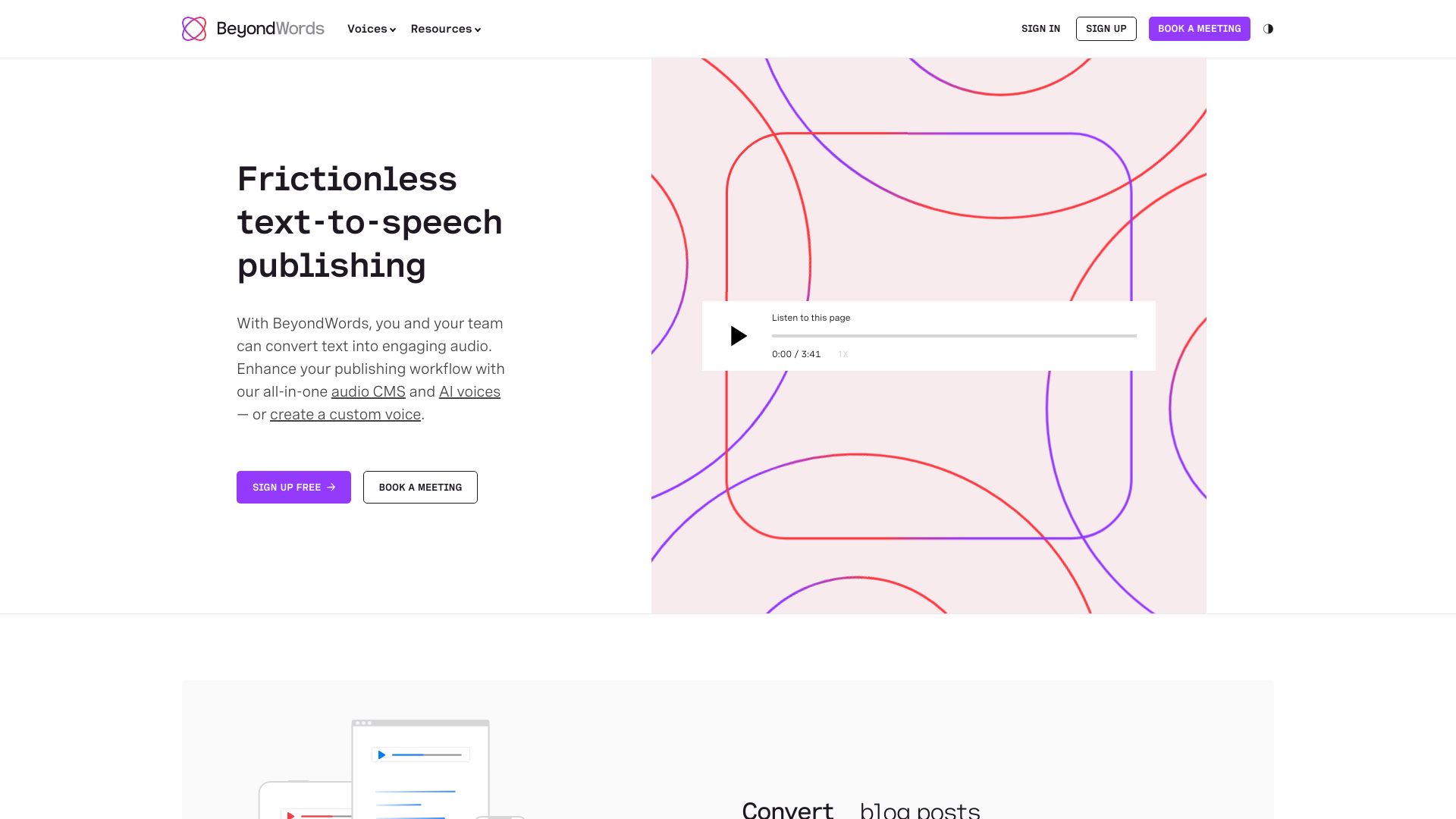
SpeechKit now resolves into BeyondWords, an AI audio CMS built for publishers. The current BeyondWords site focuses on "audio for every article" rather than generic voice generation. Its product pages describe audio articles, voice cloning, a website player, analytics, integrations, and API documentation for turning written publishing workflows into narrated audio at scale.
That repositioning matters. A marketer looking for one-off synthetic voiceovers may be better served by a general TTS studio. SpeechKit/BeyondWords is more relevant to newsrooms, magazines, B2B publishers, and content teams that want many articles converted into audio with editorial control, pronunciation management, player distribution, and performance analytics.
Best-fit use cases
| Use case | Fit | Notes | |---|---:|---| | Publisher audio articles | High | This is the core product promise. | | Website audio player | High | Distribution is part of the workflow. | | Voice cloning for editorial brands | Medium to high | Requires explicit rights and consent. | | Analytics for audio engagement | Medium to high | Useful for publishers measuring adoption. | | General chatbot voices | Low | The site explicitly focuses on articles. |
What users should verify
Publishers should evaluate CMS integrations, API workflow, audio player behavior, pronunciation controls, feed handling, voice-clone consent, editorial review, analytics granularity, data privacy, accessibility benefits, and whether audio increases engagement for their audience. Voice use should be governed by written permission from journalists, hosts, or brand talent.
Strengths
- Clear publisher-specific audio article focus.
- Combines generation, player, analytics, integrations, and API access.
- Voice cloning is framed around writers and branded editorial voices.
- Good fit for scaling article audio across large archives.
Limitations
- Less relevant for teams that need isolated voiceover files.
- Voice cloning introduces rights, consent, and reputation risk.
- Publishers still need pronunciation and editorial QA.
- Value depends on audience demand for listening experiences.
Bottom line
SpeechKit/BeyondWords is best evaluated as an audio CMS for publishers, not a generic AI voice app. It is a strong fit when article-to-audio scale, integration, player experience, and analytics matter as much as the generated voice.
Sources reviewed: BeyondWords homepage, BeyondWords voice cloning, BeyondWords audio articles.
FAQ
Is SpeechKit the same as BeyondWords?
The current SpeechKit URL resolves to BeyondWords, which positions itself as an AI audio CMS for publishers and article audio workflows.
Who should use SpeechKit or BeyondWords?
It is best for publishers, media teams, and content businesses that want to convert many written articles into audio with player, analytics, and integration support.
What should publishers check before adopting BeyondWords?
Publishers should check CMS integration, player behavior, pronunciation controls, analytics, API needs, voice-clone consent, privacy terms, and editorial QA workflow.