Synthflow.ai
Create customized AI agents effortlessly, no coding required. Our platform empowers you to design intelligent solutions that meet your specific needs. With user-friendly tools and intuitive interfaces, you can build and deploy AI agents that enhance productivity and streamline processes. Whether you're looking to automate tasks, improve customer interactions, or analyze data, our no-code approach makes it accessible for everyone. Start your journey towards innovation today and unlock the potential of AI without the complexities of programming.
AI Project Details
Synthflow AI review: no-code voice agents for business phone workflows
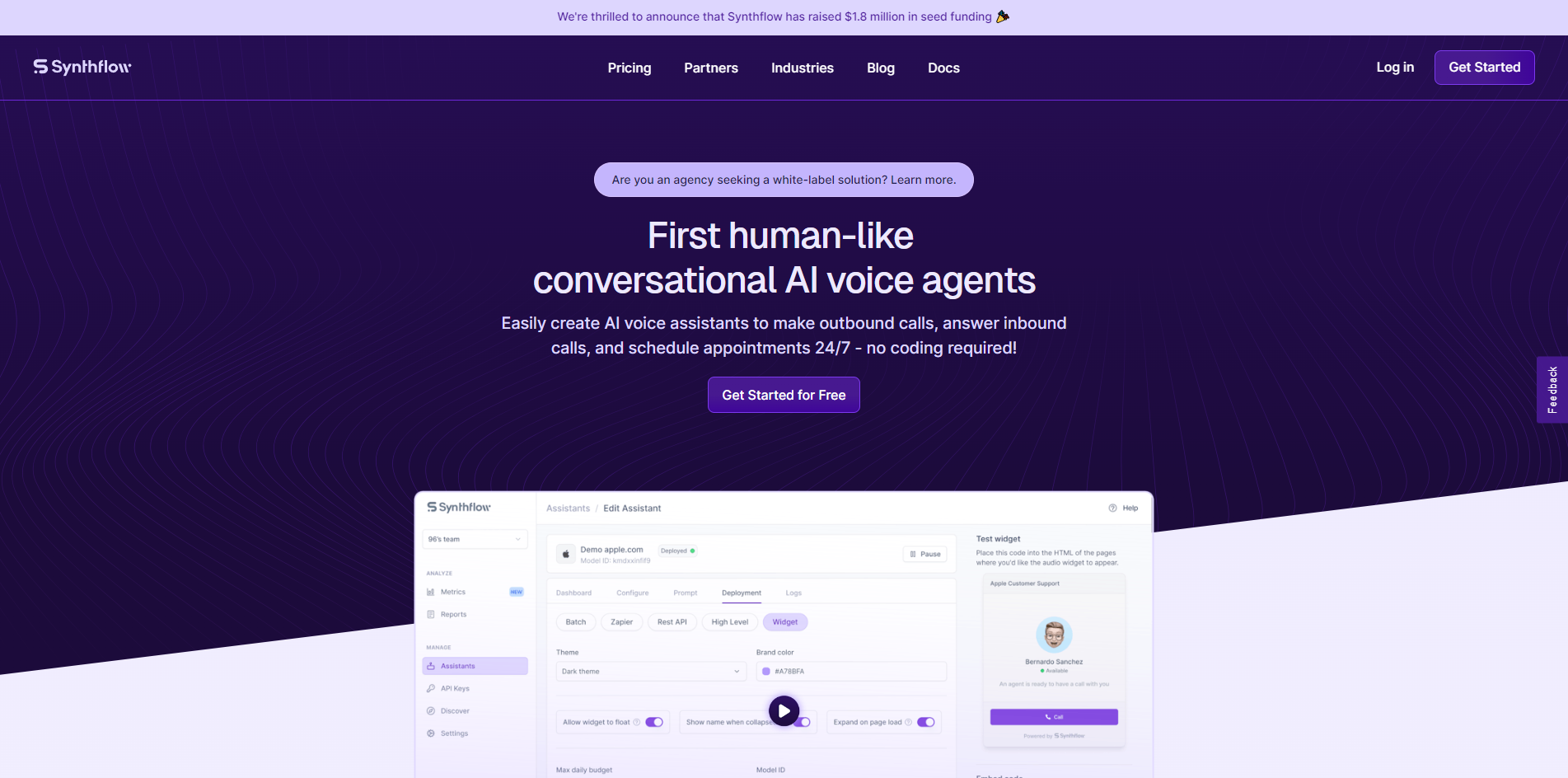
Synthflow AI is a platform for building conversational AI voice agents that can handle phone-based customer interactions. Its documentation introduces an AI-powered voice agent builder, while the pricing page describes usage-based voice and chat costs, LLM usage, telephony options, concurrency, white-labeling, enterprise infrastructure, SOC 2, GDPR, and high-volume support.
The strongest fit is business phone automation: lead qualification, appointment booking, customer intake, follow-up, support triage, and repetitive call workflows. Synthflow is not just text chat with a phone number attached. Buyers need to evaluate voice latency, transfer logic, call outcomes, CRM handoff, compliance, and the economics of minutes.
Best-fit use cases
| Use case | Synthflow fit | Notes | |---|---:|---| | Lead qualification calls | High | Useful when scripts, routing, and CRM handoff are clear. | | Appointment booking | High | Strong fit for repetitive scheduling workflows. | | Support triage | Medium to high | Works for known issue categories with escalation rules. | | Agency or reseller voice AI | Medium to high | White-label and subaccount features matter here. | | High-risk advice calls | Low | Medical, legal, finance, and safety workflows need strict human oversight. |
Cost and operations reality
Synthflow's pricing is usage-based. Voice engine, LLM choice, telephony, performance routing, latency routing, concurrency, and white-label needs can all change the real cost. The pricing page states that many pay-as-you-go setups fall into a per-minute range depending on model and telephony selections. Teams should model monthly call minutes, average call length, transfer rate, failed-call rate, and human fallback cost before rollout.
Strengths
- No-code voice agent workflow for teams that do not want to build telephony infrastructure from scratch.
- Supports business phone use cases such as intake, booking, support, and lead qualification.
- Pricing and docs expose the operational parts buyers need to evaluate: minutes, LLMs, telephony, concurrency, and compliance.
- Agency and enterprise features make it more serious than a simple demo agent.
Limitations
- Voice automation can damage trust if scripts, fallbacks, and disclosure are weak.
- Costs can scale quickly with long calls, high volume, expensive models, or extra routing.
- Real deployment needs call QA, recordings policy, consent, compliance review, and escalation design.
- Complex customer issues still need trained human agents.
TakeAI verdict
Synthflow AI is a good indexable page for buyers researching AI phone agents. The right pilot should use a narrow call flow, a small set of approved intents, clear human handoff, a per-minute budget, and outcome tracking for bookings, qualified leads, containment rate, caller satisfaction, and compliance exceptions.
Sources reviewed: Synthflow documentation, Synthflow pricing, Synthflow usage docs.
FAQ
What is Synthflow AI best for?
Synthflow AI is best for no-code voice agents that handle structured business calls such as lead qualification, booking, customer intake, and support triage.
How should a business pilot Synthflow AI?
Start with one narrow call flow, define approved intents, set handoff rules, track minute cost, record QA outcomes, and measure qualified leads or resolved calls.
Can Synthflow AI replace a call center?
It can automate repetitive call types, but complex, sensitive, escalated, or relationship-heavy conversations still need trained human agents.