Voicemaker
Voicemaker® transforms text into lifelike human voices, providing a range of voice profiles and extensive customization options. With its advanced technology, users can easily create personalized audio content that resonates with their audience. Whether you need a warm, friendly tone or a professional, authoritative voice, Voicemaker® has you covered. Experience the power of voice synthesis and elevate your projects with high-quality audio that captures attention and engages listeners. Discover the versatility of Voicemaker® today and bring your text to life!
AI Project Details
Voicemaker review: multilingual text-to-speech with voice controls and API access
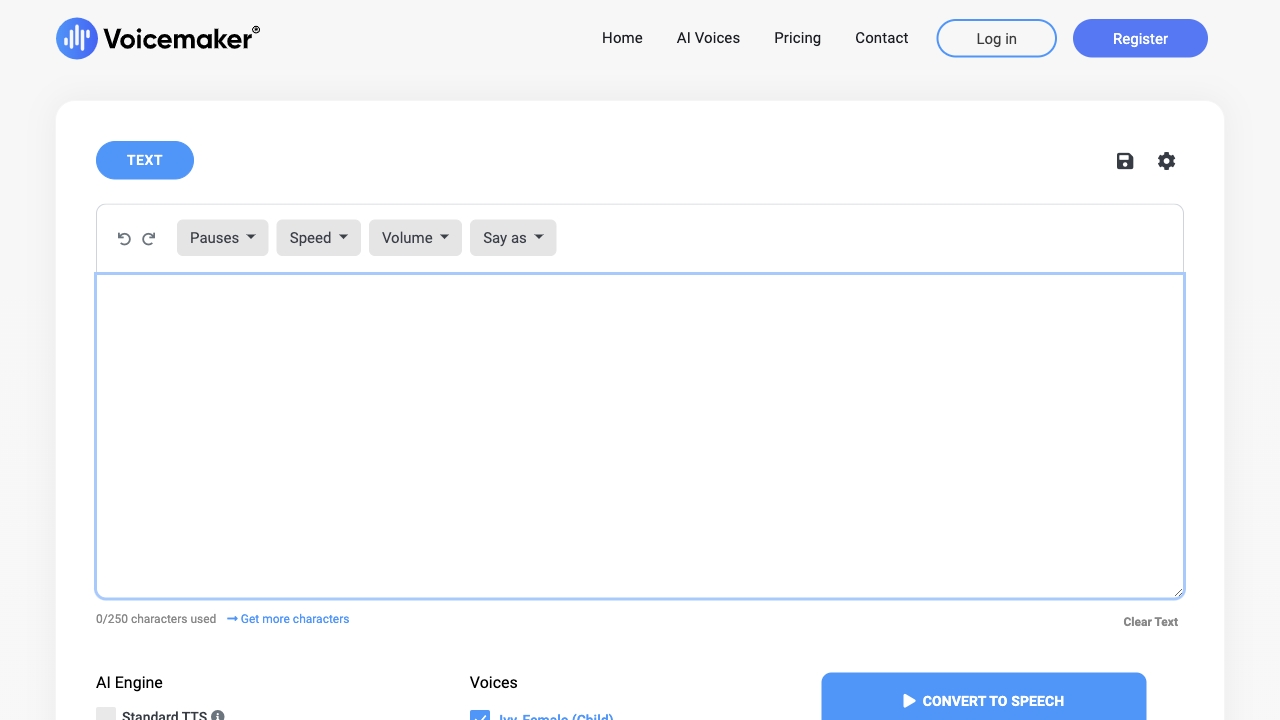
Voicemaker is a text-to-speech platform with AI voices, voice effects, speech-to-speech, voice cloning, pronunciation controls, SSML support, subtitles, projects, cloud storage, team features, and developer API access. Its public pages show broad language coverage, multiple audio formats, voice effects, expressive and high-resolution voice models, commercial-use plan distinctions, broadcast rights considerations, and pay-as-you-go API pricing.
The strongest fit is practical voiceover production: e-learning, YouTube narration, product videos, IVR, explainers, audiobooks, podcasts, and applications that need controlled TTS output across many languages. It is less about creative music vocals and more about configurable narration and speech generation.
Best-fit use cases
| Use case | Voicemaker fit | Notes | |---|---:|---| | Multilingual voiceover | High | Broad language and voice coverage suits global narration workflows. | | E-learning and explainer narration | High | Pronunciation, pauses, speed, pitch, and SSML controls are useful. | | Developer TTS API | Medium to high | API and pay-as-you-go pricing support embedded speech generation. | | Audiobook or long-form narration | Medium to high | Long-form plans and stitching features should be tested for quality. | | High-risk voice cloning | Low | Consent, rights, and policy controls must be explicit. |
Strengths
- Wide TTS feature set: voices, languages, formats, SSML, subtitles, effects, and projects.
- Practical controls for speed, pitch, volume, pauses, emphasis, and pronunciation.
- Developer API and pay-as-you-go plan are useful for app builders.
- Pricing pages expose important limits around characters, formats, commercial use, and broadcast rights.
Limitations
- Voice quality varies by model, language, accent, and selected plan.
- Commercial and broadcast rights differ by plan and need review before client work.
- Voice cloning and speech-to-speech require consent and careful governance.
- Enterprise teams should verify security, SSO, audit logs, data retention, and support expectations.
TakeAI verdict
Voicemaker is a practical choice for teams that need configurable multilingual TTS without building a speech pipeline from scratch. It is most valuable when production controls matter: pronunciation, SSML, export format, subtitles, team workspace, and API usage. Pilot it with a real narration batch across multiple languages and compare voice quality, editing time, rights coverage, and cost per finished hour.
Sources reviewed: Voicemaker homepage, Voicemaker pricing, Voicemaker API platform, Voicemaker AI voices.
FAQ
What is Voicemaker best for?
Voicemaker is best for multilingual text-to-speech, voiceover production, e-learning narration, IVR, subtitles, SSML-controlled speech, and developer TTS APIs.
Can Voicemaker be used commercially?
Paid plans include commercial-use options, but teams should review the exact plan, broadcast rights, API terms, and client requirements before publishing.
What should teams test before adopting Voicemaker?
Test voice quality by language, pronunciation controls, SSML behavior, export formats, long-form stitching, API limits, cost per finished hour, and rights coverage.